KineticForm · Digital health · Concept
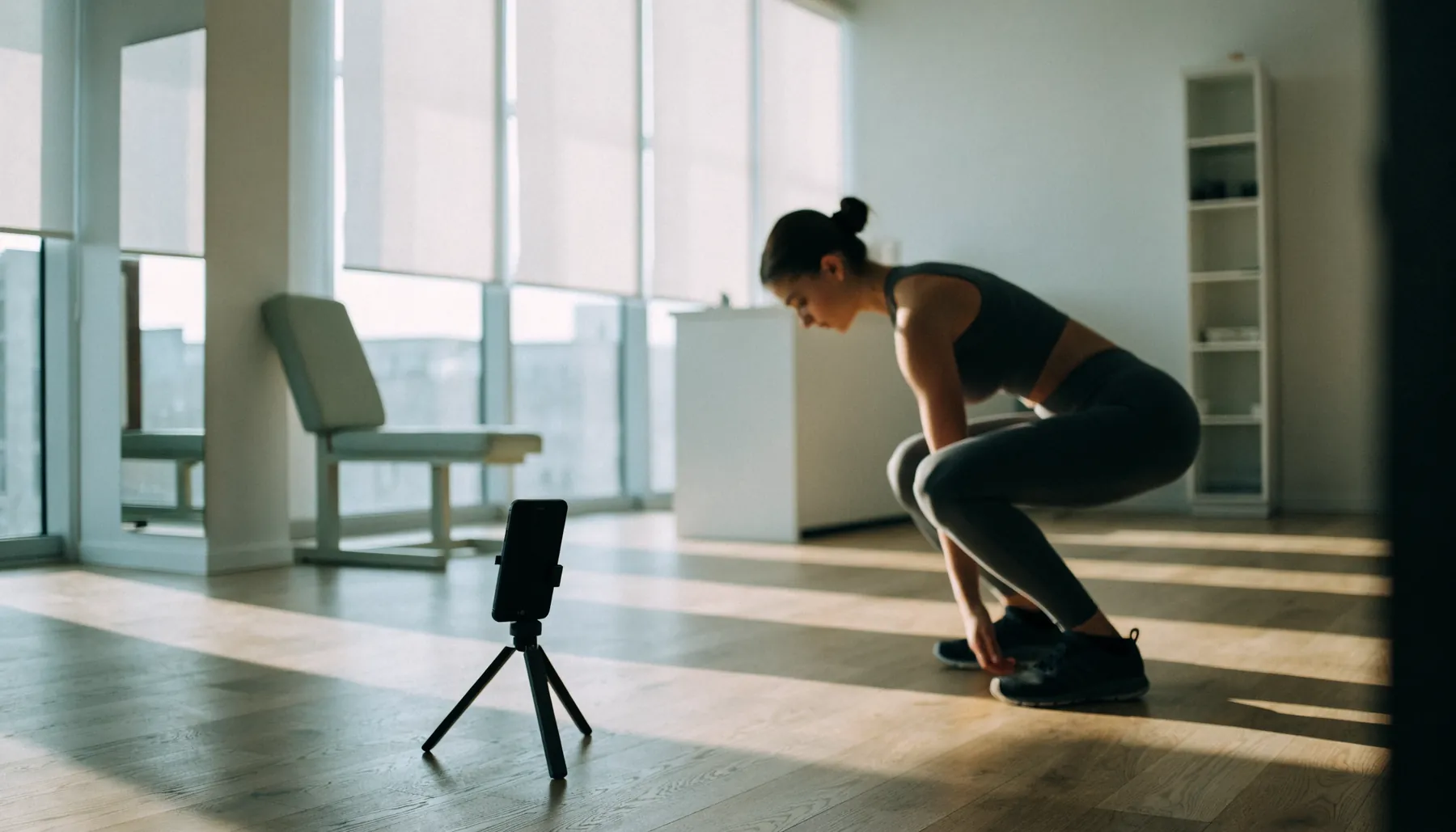
A phone on the floor that can see a knee collapsing
A physiotherapist can tell in one repetition whether a knee is caving inward. Nobody has one standing over them at seven in the morning in their living room. KineticForm reads thirty-three body landmarks at sixty frames a second and speaks a single correction into your ear before the repetition is over.
The problem
Home rehabilitation does not fail loudly. It fails quietly, one bad repetition at a time. Patients keep going, the movement drifts, and the joint that was healing stops healing — usually without anyone noticing until the next appointment six weeks later.
Wearable-based rehab was meant to close that gap and mostly died on adherence. People forget to charge the sensor, or stop strapping it on by week three. A phone already in the room has none of that friction.
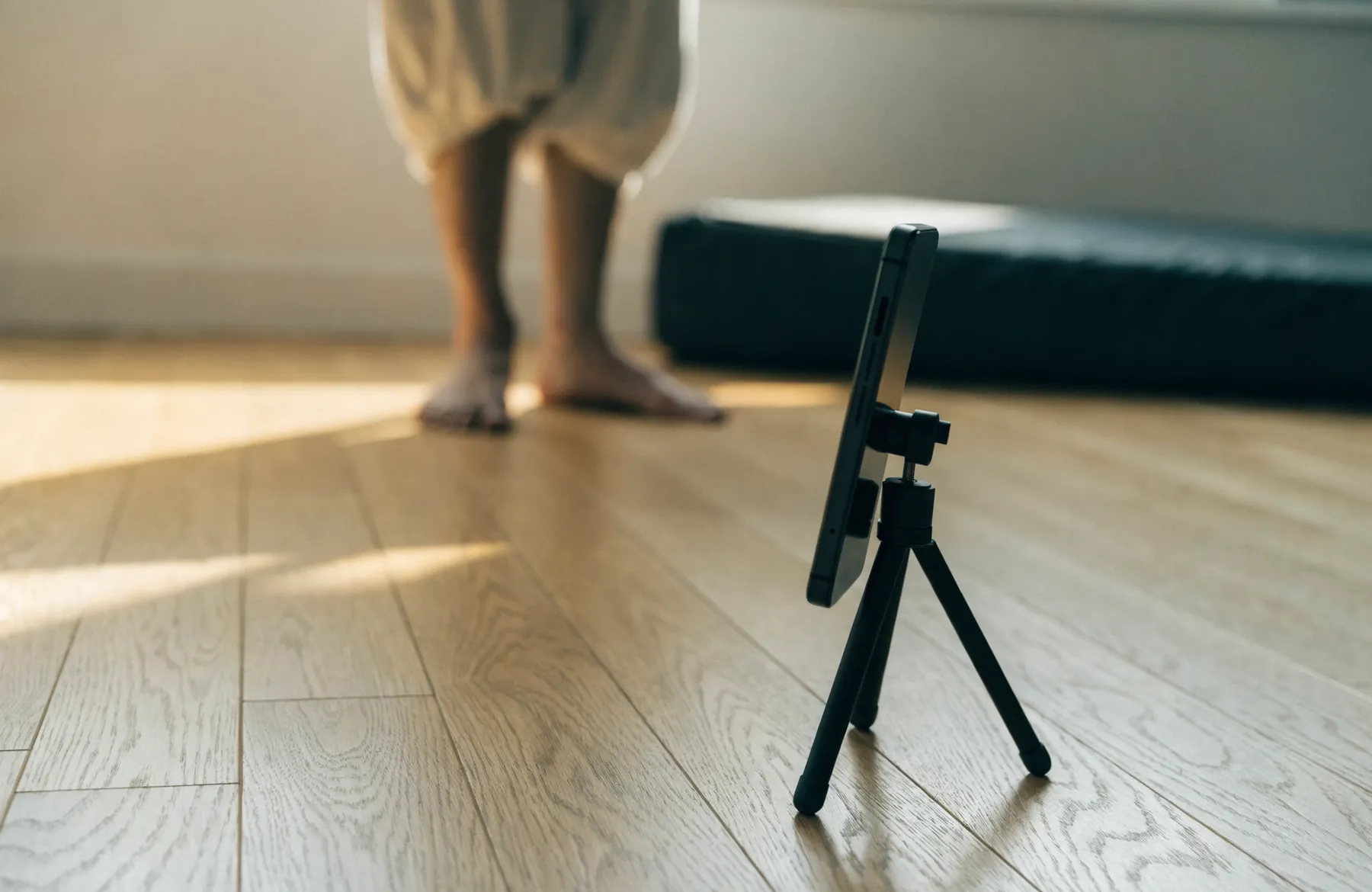
What a phone costs you is depth data and a reliable camera angle. Every decision here follows from accepting that trade rather than designing around it: one fixed, floor-level view, calibrated once per session, with detection thresholds tuned for the noise that view introduces.
The approach
Three moves, in order.
01
Measure, don't record
Pose estimation feeds a joint-angle solver that runs valgus, hip-hinge and trunk-lean checks every frame. The video is never written to disk. What leaves a session is a few hundred angles.
02
Coach by ear, not by screen
You cannot look at a phone mid-squat. Every correction is one short spoken phrase, budgeted to land within 200 ms of detection and capped at one per repetition — stacked corrections stop being coaching.
03
Give the clinic numbers, not footage
Nobody in a clinic will watch six weeks of squat video. A session resolves to peak flexion, valgus angle, symmetry index and cue count, plotted against the discharge criteria the physiotherapist set.
The work
What we designed.
The live session
Before and after the rep
What the clinic sees

Design targets
What the build has to hit to be worth trusting.
200ms
Detection to spoken cue, including Bluetooth latency
±3°
Joint angle agreement against marker-based motion capture
1 cue
Maximum per repetition, so corrections never stack
45 min
Continuous capture with no thermal throttling on an iPhone 14
These are design targets set with a sports-physiotherapy advisor, not measured results. KineticForm is a self-directed concept: it has not been built, and none of these figures has been validated in a clinic.