PolyglotLive · Travel & logistics · Concept
Two people talking at once, in two languages
Every translation app on the market makes two people take turns pressing a button. PolyglotLive keeps both microphones open, splits the screen so each person reads their own language the right way up, and renders the translation in the speaker's own voice.
The problem
Real conversations do not take turns. People overlap, interrupt, trail off and finish each other's sentences. Half-duplex translation flattens all of that into a queue, and the moment you hand someone a phone to read from, you have made them a passenger in their own conversation.
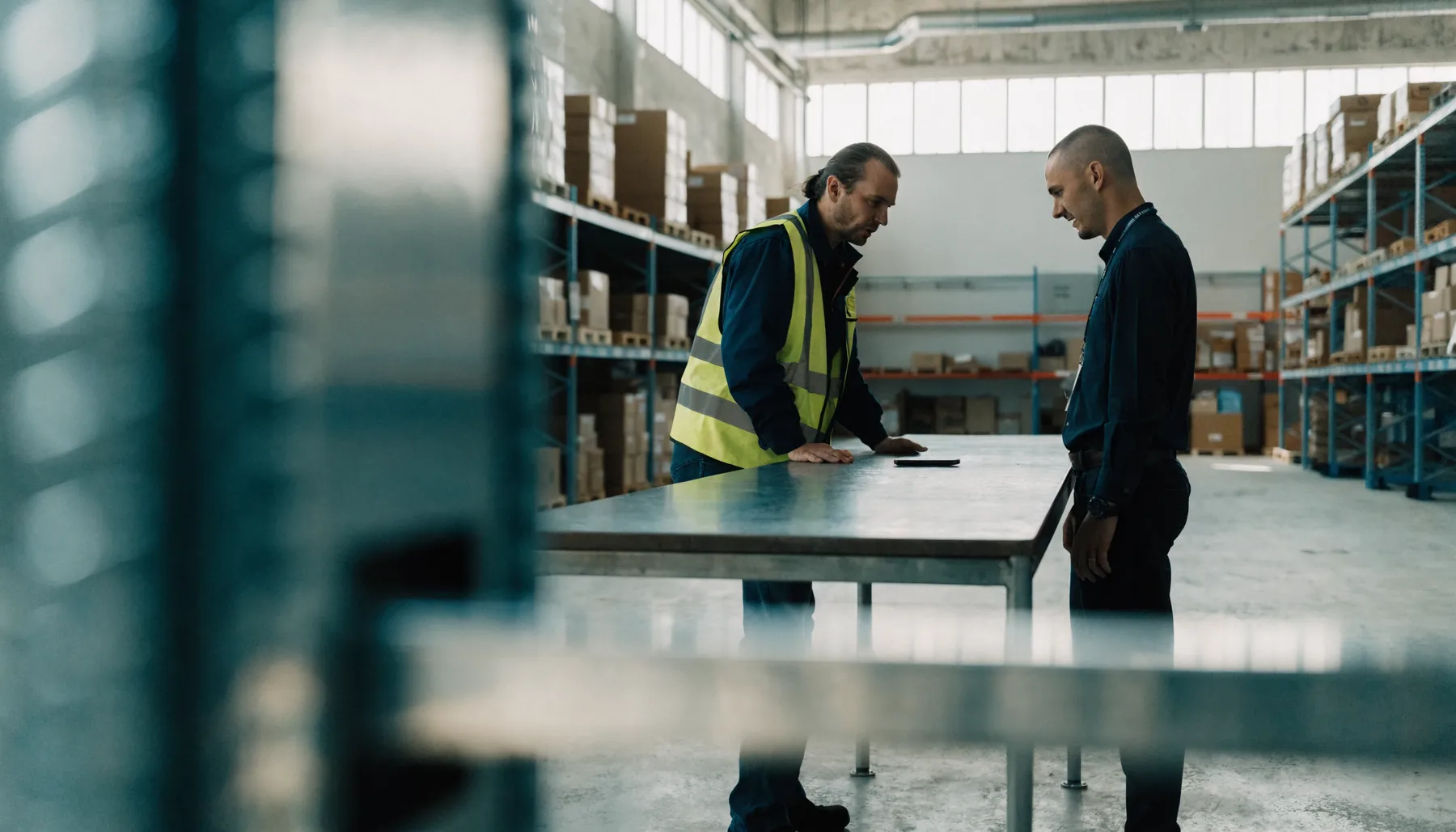
That matters most where the stakes are concrete rather than social — a driver who has to leave by eleven, a customs form nobody can find, a part number that has to be right. Those exchanges are short, overlapping, and full of vocabulary specific to one site.
They also happen in places with no signal. A loading dock, a ferry terminal, a field service call: anywhere a round trip to a server is not something you can design around.
The approach
Four moves, in order.
01
Keep both microphones open
The two channels run continuously with echo cancellation between them, so an interruption ducks the outgoing voice instead of cutting it dead, and re-queues the unfinished clause behind it.
02
Translate in the speaker's own voice
A short enrolment sample carries timbre, pace and pauses into the target language. People answer a voice that sounds like a person; they argue with a kiosk.
03
Follow the posture, not the settings
Flat on a table, folded into a tent, or nothing but earbuds. The layout follows how the device is actually being held, reading hinge angle directly rather than asking anyone to choose a mode mid-conversation.
04
Let the site own its vocabulary
Bay numbers, part codes and customs terms come from a glossary the operator maintains, so the handful of words that carry real consequences are never guessed at.
The work
What we designed.
One screen, two right ways up
Setting up, and what runs underneath
The hinge is an input
What the depot keeps


Design targets
What it has to hit before anyone would rely on it.
250ms
Mouth to ear, or people start talking over the translation
0 taps
From placing the phone down to the first translated sentence
100%
Offline for the core language pair — a loading dock has no signal
0 frames
Of audio leaving the device unless a transcript is kept
These are design targets, not measured results. PolyglotLive is a self-directed concept: it has not been built, and nothing here has been measured on shipping hardware.